



New Camera Feature
Under the new “PSCA – Public Safety App” update, citizens can now stream live video from their mobile phone cameras directly to the Safe City control room during emergencies. After calling the emergency helpline 15, a user receives a special live-feed link; once opened, their phone camera begins transmitting real-time footage to authorities.
PSCA officials claim the feature will allow faster verification of incidents and quicker dispatch of help, a potentially life-saving tool.
Why It’s a Privacy Nightmare
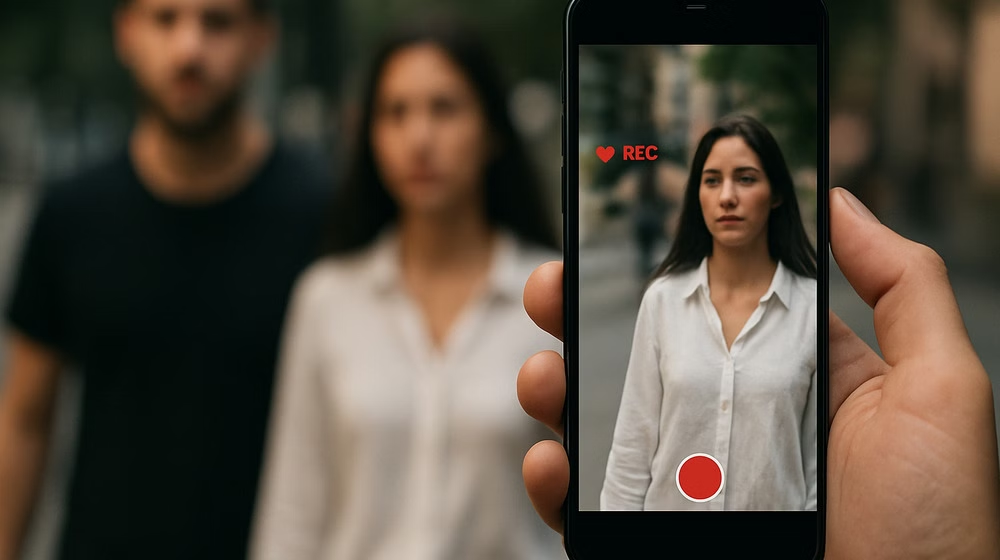
Let’s not ignore the fact that this feature could become a tool for mass surveillance, abuse, and violation of personal privacy. In a country where footage from fixed traffic and enforcement cameras has already leaked or been shared online, giving anyone a “mobile Safe City camera” dramatically increases the risk of abuse.
The Safe City system already uses a vast network of city-wide cameras, number-plate recognition, and, increasingly, facial recognition capabilities. Without clear legal guardrails on who can view, store, or share footage, live streaming introduces a new layer of danger: unchecked collection and potential misuse of personal data.
How It Could Go Wrong
Turning citizens’ phones into surveillance tools can have many dangers, including:
- People might film others indiscriminately under the pretext of “reporting,” turning public life into a constant state of monitoring.
- Live streams captured during emergencies, or even mundane scenes, could be recorded, shared, or sold. Without data-retention limits or oversight, footage could end up online or in the hands of malicious actors.
- With existing infrastructure already tied to license-plate and facial recognition, this mobile-camera feature could feed into systems that surveil individuals without cause or consent. Public safety could slip into mass surveillance.
@muskanwrites177 Reposted My video friends🌹 +views problem #newaccount #unfreez #tiktokpakistan #Hadiqaeditx #songaesthetic
Strict Guardrails Required
Real-time video could genuinely help in emergencies: crimes, accidents, medical crises, and situations where a quick visual can help responders act. And in principle, that is a valid use. PSCA itself says the feature is meant only for emergencies, not casual video sharing.
But the danger lies not in the tool itself, but in the lack of clear boundaries, oversight, and accountability. Without transparent rules on footage access, sharing, storage, and deletion, and without legal protections for citizen privacy, the risks may easily outweigh the benefits.
How to Avoid Privacy Issues
Required safeguards should include:
- Strict limits on when live streams are accepted (only genuine emergencies).
- Short, legally mandated retention periods for any footage.
- Transparent records of who accessed what footage and when.
- Strong penalties for misuse, leaks, or sharing without consent.
- Independent oversight to audit how often and why footage is used.
Otherwise, what is being sold as a public-safety improvement could easily become a pervasive, unregulated surveillance apparatus, turning every citizen’s phone into a camera for monitoring, not for protection.